The Mainframe Paradox in the Digital Era
The narrative that the mainframe is an obsolete platform does not hold up when we look at the infrastructure of the world’s largest economies.
With the launch of the IBM z17 and the Telum II processor—featuring AI accelerators embedded directly in hardware—the mainframe reaffirms its position as the central hub for high-volume transactions.
Today, 75% of Forbes-listed companies and 95% of the largest banks and insurers rely on this technology.
Mainframe modernization, therefore, is not about decommissioning, but a strategic imperative to support digital growth. Even with the expansion of cloud computing, mainframe processing continues to grow—requiring infrastructure leaders to align MIPS consumption directly with financial outcomes.
Decoding Proportionality: MIPS vs. Revenue
There is a direct correlation between installed MIPS capacity (Millions of Instructions Per Second) and corporate revenue. This metric allows executives to assess whether infrastructure is operating efficiently or if inefficiencies are eroding margins.
The table below classifies companies based on this proportionality (USD):
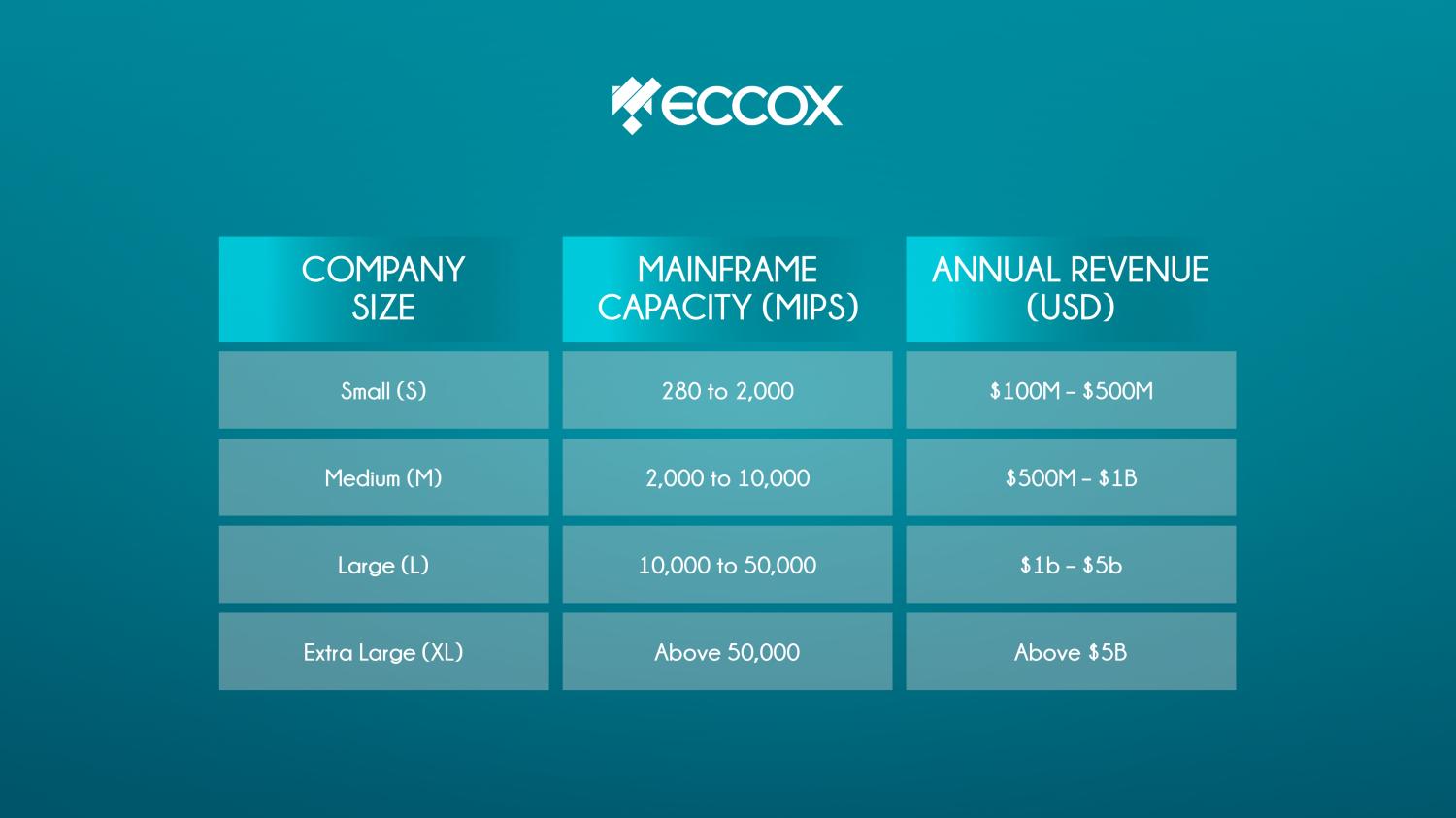
This metric is particularly relevant in the Brazilian market and serves as a compass for capacity planning, helping determine whether increased processing reflects real revenue growth.
Operational Efficiency and the “Mobile Effect”
MIPS consumption has surged due to the so-called “mobile effect”, driven by the convenience of mobile banking and PIX. The issue is that this demand has created a gap between cost and revenue.
Repeated balance and statement inquiries act as “parasitic queries”: they consume expensive MSU (Millions of Service Units) resources and increase IBM MLC (Monthly License Charge) costs without generating direct revenue.
Studies indicate that IT operational costs have increased by approximately 35% in banks just to sustain this volume of queries. Without a rigorous optimization strategy, the mainframe processes these requests with the same priority as critical transactions—silently eroding profitability.
Beyond Emulation: The Real Bottleneck Is Testing
The DevOps bottleneck in the mainframe is not in coding, but in the dependency on testing windows and the limitations of emulation tools (fake/mock/stub), which fail to replicate real-world complexity.
Eccox APT (Application for Parallel Testing) addresses this by using real containers within z/OS, enabling:
True isolation: parallel testing without data or program conflicts
Time reduction: testing cycles reduced by 70% to 80%
Self-service: web-based environment provisioning without reliance on tickets that can take weeks
In practice, the development cycle becomes driven by business needs—not infrastructure constraints.
Impact Analysis and Capacity Planning
The need to respond quickly to regulatory changes—such as Brazil’s migration to an alphanumeric CNPJ format (impacting approximately 140,000 programs)—highlights another critical factor: impact analysis.
While manual assessments can take weeks, Eccox Discovery identifies impacts in seconds, enabling structured project visibility and precise sprint planning.
This level of predictability is not just operational efficiency—it is risk mitigation. Failures in production have already resulted in multi-million losses in a single day due to insufficient testing.
Proof of Value: Bradesco and Itaú
The results demonstrate that this is not theoretical.
Bradesco (8-digit BIN Project): 88% reduction in delivery time and 87% reduction in environment provisioning
Itaú: 60% reduction in testing phases and 25% improvement in time-to-market
Operational efficiency: A process that required 3 specialists over 4 weeks (480 hours) can now be completed in approximately 2 hours
ROI: In complex environments, investment payback can occur within 6 to 8 months
This is not incremental optimization—it is a structural shift.
Modernization Strategy: Optimize Before You Migrate
Effective modernization requires clarity about the path to hybrid cloud:
Automated refactoring (e.g., AWS Blu Age): converting legacy code into modern languages
Replatforming (e.g., Rocket Software): transforming workloads into scalable services
Eccox strategy (pre-migration optimization): reducing MIPS consumption before or during migration, avoiding the transfer of inefficiencies to the cloud
Here lies the critical point: migrating without optimizing simply shifts cost.
The mainframe is not a cost to eliminate, but a high-performance asset that requires modern management.
Modernization does not mean leaving the mainframe—it means integrating it into a strategy where infrastructure responds to business velocity.
Maximizing the value of each MIPS, eliminating testing bottlenecks, and protecting margins is no longer optimization—it is a condition for sustainability.
In this context, mainframe modernization is not a technical choice. It is a business decision.
If MIPS consumption no longer aligns with the value generated by the business, the issue may not be capacity—but how it is being used.


About Post Author